
 Jeff Atwood recently discussed The Dark Side of Extensions, and advocated taking the five most useful popular extensions to Firefox and integrating them into the product as features. Before the Firefox team decides to go do that, it might be useful for them to step back and consider what they want Firefox to be: a solution or a platform.
The platform vs solution question eventually rises in any successful software project. The reason is that successful projects are used and usually by a lot of people. The more people use your software, the more people want to change it to fit their particular needs, address weak areas in the product, or adapt it for new uses. Once this pressure starts being applied, from your customers, you have a choice. You can hire extra people, work extra hard and try to take care of the most frequently requested changes as quickly as possible. Or you can do the work to make your software “extensible”, essentially to turn it into a platform. Of course, you can also do something in between.
The most obvious example of a platform in software is the operating system for a personal computer. Windows, Linux, and Mac OS X, are all platforms for personal computing. Of the three Linux is probably the most pure as a platform. Mac OS X is the least pure, because Apple sees it more as one part of a larger solution that they offer to users, and so don’t give their developers the same level of support that either Microsoft or the open source community does.
Those who advocate a pure platform approach like Linux, because you can include or exclude “bloat” (i.e. features) that you never use. This was very apparent in the comments to Jeff’s post, where tons of people said, in effect, “I don’t want a bloated browser like IE or Opera - I just want it to include the things I use.” Mozilla is definitely going down the platform route with Firefox, and the users who therefore choose Firefox reflect that.
Microsoft tends to take a middle of the road approach with its software. Windows and IE both attempt to be solutions and platforms at the same time. And both had great success because they got the killer “apps”: Windows had Office and IE had all the websites that only worked in IE for years. Heck, even now my wife won’t switch to Firefox because some pages “don’t look good”, despite Firefox’s apparently better support for standards.
Apple obviously approaches the problem by trying to produce a solution, and that has been extremely successful for them in certain markets (can anyone say iPod? iPhone?). In the past they haven’t had as much success as a platform, so it will be interesting to see how the new iPhone SDK works out for both Apple and it’s developers.
Ultimately, I’m not sure that creating a platform for end-user extensions is the right way to go in the browser market. Platforms are market makers. Windows created a huge market for all types of software by creating a successful platform for personal computers. The real market that browsers enable is the market for cool web sites and services, not the market for browser extensions (how many browser extensions are profitable products?). A browser needs to focus on becoming a platform for web sites and services, and becoming an easy way to get to those for end users. Browsers are not the only user interface to the internet, but they are the primary one and can remain so only if they provide an excellent platform for creating web sites. Of course, there are huge problems in trying to do that. But if a browser can do that, in a way that gives it a competitive advantage, it will become the platform for the web and be more successful, and probably more profitable, than Windows.
 Of course, if you want to get more done in the morning running probably isn’t going to cut it, though it might. The key is to find something that is important to you that you’re not prioritizing like you should. For me, it was running. For you, it might be photography, or practicing an instrument, or working on a coding project on the side, or riding your bike, or reading great literature (or not so great literature), or woodworking, or whatever. The main thing to recognize is that when you put your priorities in the right order, life is just smoother. The important things get done, the less important things are more clearly less important, and you’re happier about everything you do. By starting your day with the “first things first” you set the tone for the whole day. And anticipating that each night can make it easier to prepare accordingly. I’ve started getting all my running gear ready each night, and I’m going to bed earlier so that I’m ready to go when the alarm goes off.
 So I’m working to setup my new “dev box at home” with Vista and finally noticed that there was no administrator account. That was not something I had heard about, but have since found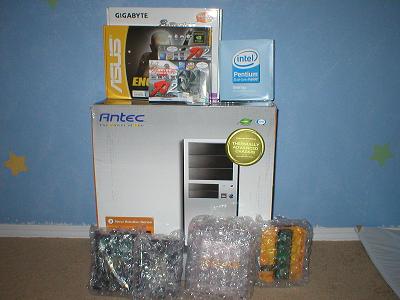

 So, my last post was all about how I’m trying to become more productive by learning a set of keyboard shortcuts that I can use for faster text/code editing. In this post, I’m going to argue against the premise that it could actually make you faster. The reasons I’ll outline include opportunity costs, lack of portability, anything else? Well, we’ll see, won’t we.